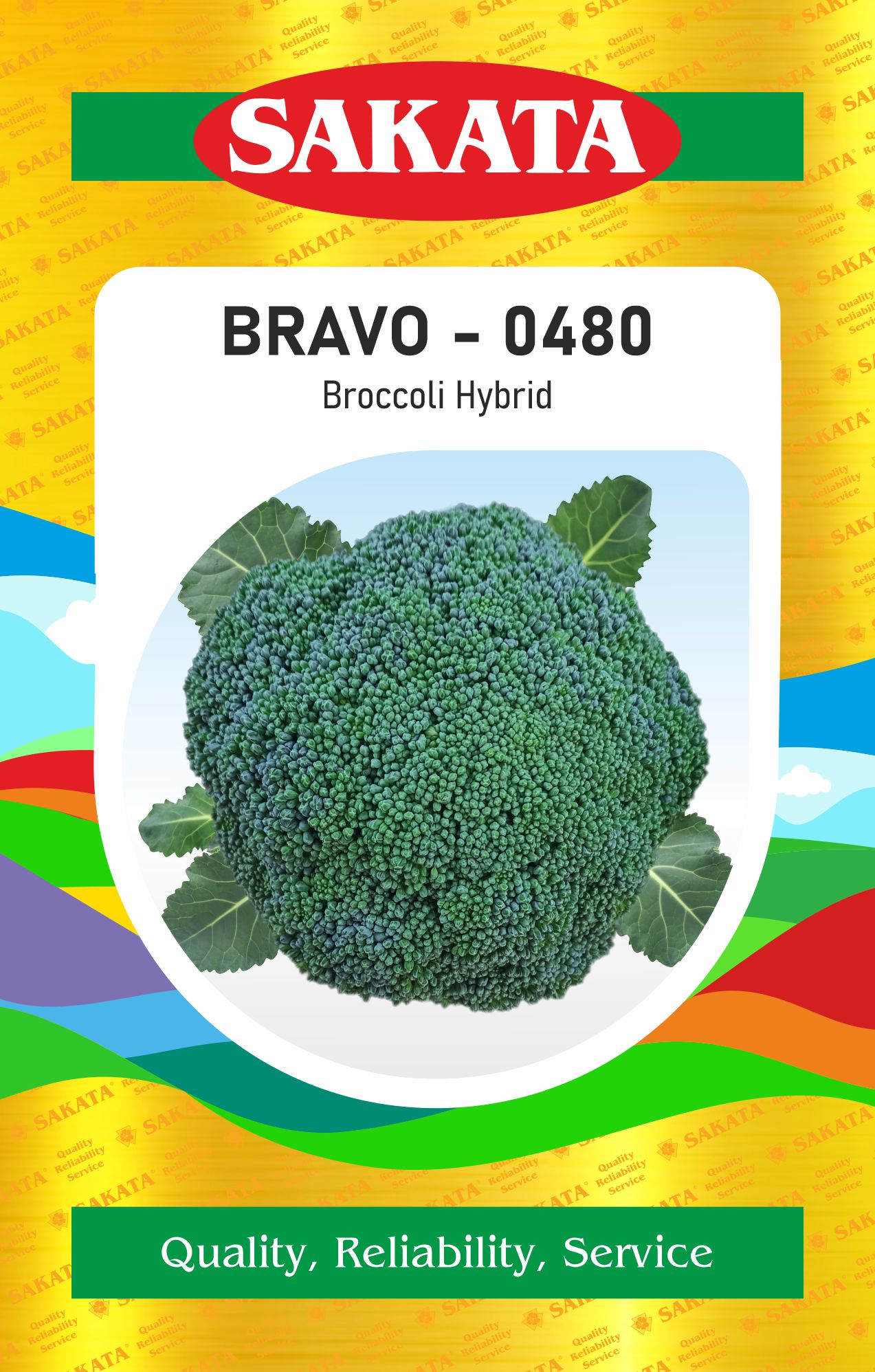
F1 BRAVO - 0480
| Crop Name | Broccoli |
|---|---|
| Hybrid Name | Bravo - 0480 |
| Segment | Calabrese |
| Plant Habit | Erect |
| Maturity Period | 55 – 65 DAT |
| Characteristics |
• Early maturity suitable for the winter market • Dome shaped curd with good compactness and attractive green color • Anthocyanin-free with stable green appearance • Uniform bead size • Less prone to hollow stem, better market acceptance |
| Average Curd Weight | 400–450 g |
| Climate | It is cool season crop. The optimum temperature range is 10-25°C. |
| Sowing Window | September – November |
| Focused Market | KA, WB, AS, HR, PB, UP |
| Parameter | Description | ||||||||||||||
|---|---|---|---|---|---|---|---|---|---|---|---|---|---|---|---|
| Scientific Name | Brassica oleraceae var. italica | ||||||||||||||
| Hybrid | Bravo - 0480 | ||||||||||||||
| Soil | Well-drained red loamy soils with a pH range of 6.5 to 7. | ||||||||||||||
| Land Preparation | Plough the land 2–3 times, crush the clods with rotavator, and prepare fine beds. | ||||||||||||||
| Spacing | 60 × 45 cm | ||||||||||||||
| Climate | It is a cool-season crop but sensitive to both low and high temperatures. Optimum temperature range: 10–25°C. | ||||||||||||||
| Season |
|
||||||||||||||
| Seed Rate | 0.20 kg / Ha or 30 thousand seedlings / Ha | ||||||||||||||
| Fertilizers & Manures |
|
||||||||||||||
| Irrigation | Irrigation: 3-4 days interval to maintain soil moisture at field capacity. In summer once in 2-3 days interval. Rainy and Rabi: 4-5 days interval Method of irrigation – Furrow / Drip irrigation, Avoid sprinkler irrigation | ||||||||||||||
| Weed Control | Manual weeding: 2-3 times during crop cycle | ||||||||||||||
| Special Crop Practices | Removal of side shoots at 30-40 days after transplanting. Removal of lower leaves touching the ground to maintain stem/stalk length and avoiding foliar disease. | ||||||||||||||
| Diseases |
|
||||||||||||||
| Pests |
|
||||||||||||||
| Harvesting |
Harvesting starts from 55- 65 days after transplanting. Average curd weight at the time of harvest is 400-450 g |
||||||||||||||
| Yield | 10–12 t/ha |
| Parameter | Description |
|---|---|
| Anthocyanin |
Anthocyanin pigmentation on the curd occurs under extreme temperature stress conditions,affecting curd appearance. Controlled by using tolerant hybrids |
| Bracting | Leafy growth within the curd under high temperature and low moisture conditions. |
| Hollow Stem | Presence of cavities within the broccoli stem. Controlled by avoiding excessive irrigation and excessive nitrogen fertilizer application. Boron application @ 25 kg/ha can also help. |
| Cat Eye | Some florets in the curd prematurely develop into yellow or green flower buds, resulting in uneven bead size and colour. Cat eye may occur due to fluctuations in temperature and soil moisture and can be minimized by avoiding excessive irrigation. |
| Brown Beads | Brown beads are small, brown, undeveloped flower buds on the broccoli head. This disorder may be associated with high temperatures, excessive moisture, or calcium deficiency and can be minimized by avoiding excessive irrigation and applying calcium nitrate (CN) at 50 kg / Ha. |