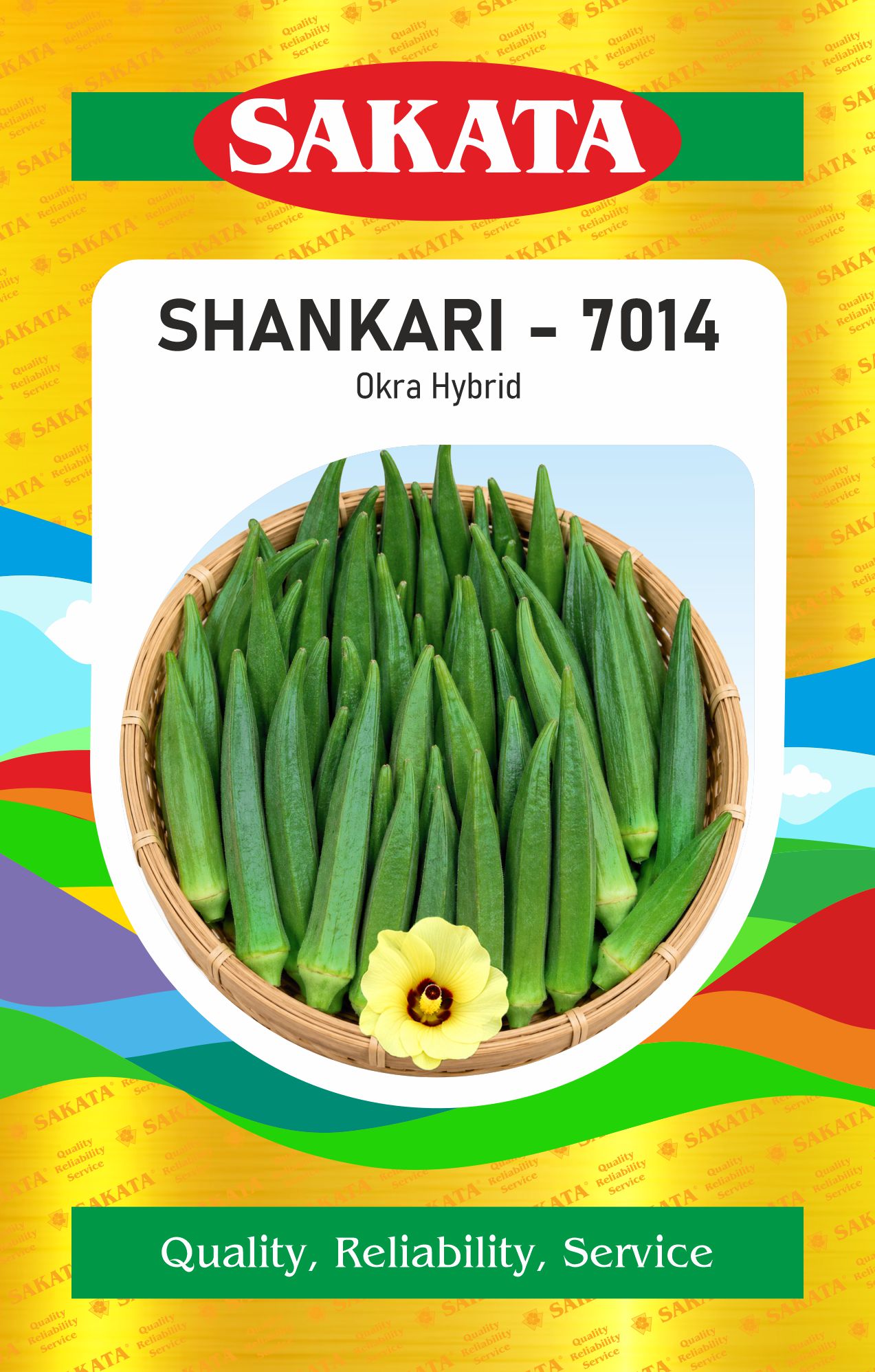
SHANKARI - 7014
| Crop Name | Okra |
|---|---|
| Hybrid Name | Shankari - 7014 |
| Segment | Pentagon |
| Plant Habit | Dwarf to medium-tall plants |
| Maturity Period | 40-42 DAS |
| Characteristics |
• Green pods without a yellow ring • Fruit length: 12-13 cm • Short internodes • Early maturity and cut-leaf type • Low pubescence and easy harvesting • Intermediate resistance to YVMV • Suitable for HDP |
| Average Fruit Weight | 10-12 g |
| Climate | Okra is a typical tropical or subtropical crop |
| Sowing Window | Oct-Nov, Jan-Feb |
| Focused Market | MP, HR, PB, UP, RJ |
| Parameter | Description | ||||||||||||||
|---|---|---|---|---|---|---|---|---|---|---|---|---|---|---|---|
| Scientific Name | Abelmoschus esculentus L. | ||||||||||||||
| Hybrid | Shankari - 7014 | ||||||||||||||
| Soil | Okra prefers loose, well-drained and fertile soil. The ideal pH for growth of plants is 6-8. | ||||||||||||||
| Land Preparation | The field should be ploughed thoroughly 2-3 times to obtain a fine tilth. Ridges and furrows or raised beds are prepared. Seeds are dibbled on the sides of ridges or on raised beds. Soak seeds for 6-12 hours before sowing to enhance germination during summer. | ||||||||||||||
| Spacing | 60 × 30 cm | ||||||||||||||
| Climate | Okra is a typical tropical or subtropical crop and cannot tolerate frost. Performance is also adversely affected by drought, low night temperatures, and shade. Under high temperatures and low humidity, plant growth is stunted and will be shorter in stature. Similarly, flowers drop when day temperature exceeds 42°C. | ||||||||||||||
| Season | Oct-Nov and Jan-Feb | ||||||||||||||
| Seed Rate | 6-7 kg/ha | ||||||||||||||
| Fertilizers & Manures |
|
||||||||||||||
| Irrigation | Water stress at flowering and fruiting stages will drastically influence growth of plants, size of fruits and yield. Immediately after sowing, field is irrigated. Subsequent irrigation is given at fixed intervals depending on texture of soil and climate. In black soils, irrigation is done at 5-6 days interval. | ||||||||||||||
| Weed Control | Manual weeding is employed to control weeds. | ||||||||||||||
| Any Special Crop Practices | |||||||||||||||
| Diseases |
|
||||||||||||||
| Pests |
|
||||||||||||||
| Harvesting | Maturity: 40-42 days after sowing. Harvest fruits when they attain maximum size but still tender. Harvesting is done on alternate days with a knife or by bending pedicel with a jerk. For harvesting, cotton cloth hand gloves should be used to protect fingers from stinging effect. It is advisable to harvest in morning hours since fruit hairs will be soft. Sprinkling water on pods during night will keep them cool and fresh for market. | ||||||||||||||
| Yield | 25-30 t/ha | ||||||||||||||
Content not available.