| Parameter | Description | ||||||||||||||||||
|---|---|---|---|---|---|---|---|---|---|---|---|---|---|---|---|---|---|---|---|
| Scientific name | Cucumis sativus | ||||||||||||||||||
| Hybrid | F1 Singha 4 | ||||||||||||||||||
| Soil | It can be sown in variety of soils ranging from sandy loam to heavy soil. But a loamy soil which is rich in organic matter and has well drainage system is best for cucumber farming. The pH ranging from 6-7 is suited best for cucumber farming. | ||||||||||||||||||
| Land Preparation | For cucumber plantation, it requires well prepared and weed free field. To bring soil to fine tilth, 3-4 ploughings must be done before planting. FYM is mixed with soil to enrich the field. | ||||||||||||||||||
| Spacing | 120*30 cm (stacking), 150*45 cm (Non-staking) | ||||||||||||||||||
| Climate | Cucumber requires an ideal temperature of 25-30°C | ||||||||||||||||||
| Season | All seasons: Rainy, Winter, Summer | ||||||||||||||||||
| Seed Rate | 0.5-0.75 kg/ha | ||||||||||||||||||
| Fertilizers & Manures |
|
||||||||||||||||||
| Irrigation | In summer season it requires frequent irrigation. Pre-irrigation is required before sowing then subsequent irrigation is required after 2-3 days of sowing. After second sowing, the crops are then irrigated at the interval of 4-5 days. Drip irrigation is very useful for this crop. | ||||||||||||||||||
| Weed Control | Manual weeding | ||||||||||||||||||
| Any special crop practices | Staking is required for high yields | ||||||||||||||||||
| Diseases |
|
||||||||||||||||||
| Pests |
|
||||||||||||||||||
| Harvesting | Plants start yielding in about 45-48 days after sowing. Mainly 10-12 harvestings can be done. Harvesting is mainly done when the seed of cucumber is soft and the fruits are green and young. | ||||||||||||||||||
| Yield | 45-50 t/ha | ||||||||||||||||||
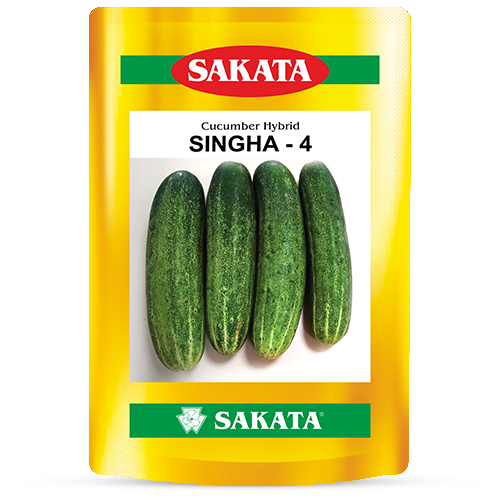
F1 Singha 4
| Crop Name | Cucumber |
|---|---|
| Hybrid Name | F1 Singha 4 |
| Segment | Parthenocarpy |
| Plant Habit | Strong vigorous vines with dense foliage |
| Maturity Period | 42–45 DAS |
| Characteristics | • Dark green parthenocarpic, bitter-free fruits • Cylindrical fruits with slow seed maturity • Intermediate resistance to Downy mildew • Fruit: 16–18 cm length & 4 cm diameter |
| Average Fruit Weight | 180–200 g |
| Climate | Cucumber requires an ideal temperature of 25–30°C. |
| Sowing Window | All season: Summer, Rainy, Winter |
| Focused Market | All India |
| Parameter | Description |
|---|---|
| Necking | Due to improper pollination, poor management. Control : Improve Honeybee/pollinator activity in the field. Use standard package of practices. |
| Hollow Heart | This disorder appears as a cavity within the fruit, often affecting its texture and marketability. Control : Avoid excess nitrogen and apply Multinutrient mix @ 12 Kg/Ha. |
| Fruit Cracking | Cracks in the fruit can be caused by rapid changes in water uptake or stress. Control : Proper irrigation management can resolve cracking. |
| Light Belly Color | The under surface of the fruit remains light instead of turning dark green. Control : Try to follow staking method of cultivation. Removing the lower leaves about 2 feet height will increase aeration and sunlight. |