| Parameter | Description | ||||||||||||
|---|---|---|---|---|---|---|---|---|---|---|---|---|---|
| Scientific name | Brassica oleracea var. gongylodes | ||||||||||||
| Hybrid | F1 Quick Star | ||||||||||||
| Soil | For early crop light soils are best whereas for late crop heavy soils are preferred. The optimum soil pH is 6 to 7. | ||||||||||||
| Land Preparation | Ploughing of land 2-3 times and make fine tilth | ||||||||||||
| Spacing | 25*25 cm or 30*30 cm | ||||||||||||
| Climate | Kohlrabi thrives under a cool, moist climate, particularly during the winter months in the plains. The ideal temperature range for kohlrabi growth is between 15°C and 25°C. | ||||||||||||
| Season | Rainy and Winter season | ||||||||||||
| Seed Rate | 0.3-0.4 kg/ha | ||||||||||||
| Fertilizers & Manures |
|
||||||||||||
| Irrigation | 3-4 days interval to maintain field capacity in winter and 7 days once in rainy season | ||||||||||||
| Weed Control | Manual weeding: 2-3 times | ||||||||||||
| Any special crop practices | |||||||||||||
| Diseases |
|
||||||||||||
| Pests |
|
||||||||||||
| Harvesting | Harvesting is done when the heads are well developed and firm, usually ready by 30-35 days after transplanting | ||||||||||||
| Yield | 25-30 t/ha | ||||||||||||
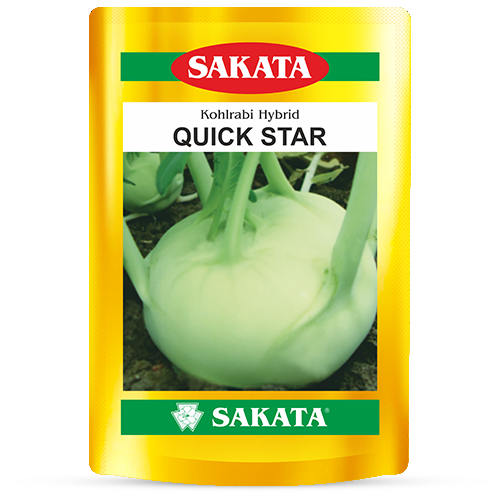
F1 Quick Star
| Crop Name | Kohlrabi |
|---|---|
| Hybrid Name | F1 Quick Star |
| Segment | Temperate |
| Plant Habit | Erect plant habit |
| Maturity Period | 30–35 DAT |
| Characteristics |
• Early maturity hybrid with dark green, erect leaves • Flat round, smooth bulb with attractive light green colour • Excellent uniformity in size and maturity • Bulbs are fiberless having excellent taste and flavor • Good heat and rain tolerance |
| Average Bulb Weight | 150–200 g |
| Climate | The ideal temperature range for kohlrabi growth is between 15°C and 25°C. |
| Sowing Window | Rainy and Winter |
| Focused Market | AS, CG, J&K, OD, TR, WB |
No description