| Parameter | Description | ||||||||||||||||||
|---|---|---|---|---|---|---|---|---|---|---|---|---|---|---|---|---|---|---|---|
| Scientific name | Daucus carota | ||||||||||||||||||
| Hybrid | F1 Inspire 0106 | ||||||||||||||||||
| Soil | Well-drained, deep loamy or sandy loam soil with pH 6.0–7.5. Avoid saline soils. | ||||||||||||||||||
| Land Preparation | Deep ploughing followed by harrowing. Apply well-decomposed FYM (Farm Yard Manure) @ 20-25 tons/ha during land preparation. | ||||||||||||||||||
| Spacing | 30 cm X 10 cm | ||||||||||||||||||
| Climate | Climate: Cool season crop | ||||||||||||||||||
| Season | Winter: Sep-Dec | ||||||||||||||||||
| Seed Rate | 7.5 to 8 Kg/Ha | ||||||||||||||||||
| Fertilizers & Manures |
|
||||||||||||||||||
| Irrigation | Light irrigation immediately after sowing. Regular irrigation at 7–10 day intervals depending on soil and climate. | ||||||||||||||||||
| Weed Control | First weeding: 20 days after sowing. Subsequent weeding: As required. Use of pre-emergence herbicides like Pendimethalin @ 0.75–1.0 kg/ha if needed. | ||||||||||||||||||
| Any special crop practices | Thinning: 25–30 DAS to maintain 10 cm spacing. | ||||||||||||||||||
| Diseases |
|
||||||||||||||||||
| Pests |
|
||||||||||||||||||
| Harvesting | 90 to 95 DAS | ||||||||||||||||||
| Yield | 65-70 tons/Ha | ||||||||||||||||||
F1 Inspire 0106
| Crop Name | Carrot |
|---|---|
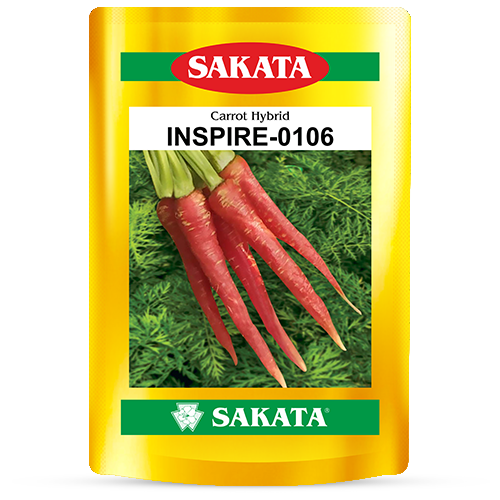
| Hybrid Name | F1 Inspire 0106 |
| Segment | Desi / Red |
| Plant Habit | Erect |
| Maturity Period | 90–95 DAS |
| Characteristics | • Strong vigorous hybrid with green foliage • Attractive red internal and external color • Root length 30–35 cm and 4–4.5 cm diameter • Less wastage and cracking with good market acceptance |
| Yield | 65–70 ton/ha |
| Climate | Cool Season |
| Sowing Window | September–December |
| Focused Market | RJ, UP, PB, HR |
| Disorder / Symptom | Symptoms & Management |
|---|---|
| Forking of Roots |
Roots divide into two or more branches. Management: Use deep, loose soil. Apply well-decomposed FYM only. Maintain proper spacing and avoid water stagnation. |
| Cracking of Roots |
Vertical splits on roots, especially near maturity, caused by excess nitrogen and high moisture. Management: Avoid excess nitrogen and irrigation. Apply borax @ 10 kg/ha once during field preparation. |
| Greening of Crown |
Top part of root turns green. Management: Earth-up (cover soil) around root zone at 30–40 days after sowing. |
| Anthocyanin Pigmentation |
Due to moisture stress. Management: Maintain proper irrigation schedules. |
| Necking (Cucurbits) |
Due to improper pollination or poor management. Control: Improve Honeybee/pollinator activity in the field. Use standard package of practices. |
| Hollow Heart (Cucurbits) |
Cavity within the fruit affecting texture and marketability. Control: Avoid excess nitrogen and apply Multinutrient mix @ 12 Kg/Ha. |
| Fruit Cracking (Cucurbits) |
Cracks caused by rapid changes in water uptake or stress. Control: Proper irrigation management. |
| Light Belly Color (Cucurbits) |
Under surface of fruit remains light instead of turning dark green. Control: Follow staking method. Remove lower leaves about 2 feet height to increase aeration and sunlight. |