
| Parameter | Description | ||||||||||||||||
|---|---|---|---|---|---|---|---|---|---|---|---|---|---|---|---|---|---|
| Scientific Name | Cucurbita moschata | ||||||||||||||||
| Hybrid | F1 Nakul | ||||||||||||||||
| Soil | Pumpkin can be grown in various kinds of soil but sandy loam to loam soil is ideal. A well-drained field should be incorporated with organic fertilizer before planting. It does best at a pH of 6.0-7.0. | ||||||||||||||||
| Land Preparation | The land should be thoroughly prepared by ploughing 4-5 times. FYM @ 25-30 t/ha should be mixed thoroughly in the field. | ||||||||||||||||
| Spacing | 150×60 cm | ||||||||||||||||
| Climate | Pumpkin is a warm-season crop but can withstand cool weather. The plant is also tolerant to partial shade. A temperature of 18-30°C is optimal for its cultivation. | ||||||||||||||||
| Season | Rainy and Winter | ||||||||||||||||
| Seed Rate | 1 kg/Ha | ||||||||||||||||
| Fertilizers & Manures |
|
||||||||||||||||
| Irrigation | Weekly once irrigation needed in rainy season based on soil moisture, 2 times in winter. | ||||||||||||||||
| Weed Control | Manual weeding 2-3 times required. | ||||||||||||||||
| Any Special Crop Practices | Bitter gourd being a weak climber needs support for its growth. The plants trailed on the support (bower) continue to give yield for 6-7 months. Planting is done at a spacing of 2 x 1.5 m. Furrows are opened at 2 m and irrigation channels are laid out at 5-6 m distance. | ||||||||||||||||
| Diseases |
|
||||||||||||||||
| Pests |
|
||||||||||||||||
| Harvesting | Pumpkin mature at 65-70 days, fully grown fruit was harvested | ||||||||||||||||
| Yield | 30-35 t/ha | ||||||||||||||||
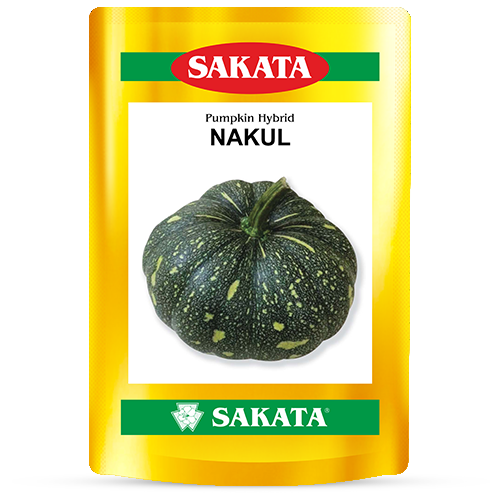
F1 Nakul
| Crop Name | Pumpkin |
|---|---|
| Hybrid Name | F1 Nakul |
| Segment | Round |
| Plant Habit | Vigorous vines |
| Maturity Period | 65–70 DAS |
| Characteristics | • Very good fruit setting. • Attractive flat round fruit shape with green skin and yellow speckles. • Good internal yellow flesh color. • High yield potential. • Excellent shelf-life. • Suitable for long transport. |
| Average Fruit Weight | 1.5–2 Kg |
| Climate | Warm season; optimum temperature range: 18–30°C. |
| Sowing Window | Rainy and Winter |
| Focused Market | All India |
No description