| Parameter | Description | ||||||||||||||||||||
|---|---|---|---|---|---|---|---|---|---|---|---|---|---|---|---|---|---|---|---|---|---|
| Scientific Name | Solanum lycopersicum | ||||||||||||||||||||
| Hybrid | F1 Red Dollar 1197 | ||||||||||||||||||||
| Soil | Well-drained, fertile loam soils with good moisture retention. Sandy loam to clay loam with high organic content. Ideal pH: 6.0–7.0. Avoid waterlogged conditions. | ||||||||||||||||||||
| Land Preparation | Plough 2–3 times to achieve fine tilth. Incorporate 15–20 t/ha well-decomposed FYM or compost. Prepare beds or ridges and furrows depending on irrigation method. | ||||||||||||||||||||
| Spacing | 90 × 45 cm | ||||||||||||||||||||
| Climate | Warm season crop. Optimum temperature: 21–24°C. Temperatures below 10°C or above 38°C affect growth and fruit set. | ||||||||||||||||||||
| Season | Summer, Rainy, Winter | ||||||||||||||||||||
| Seed Rate | 70–75 g/ha | ||||||||||||||||||||
| Fertilizers & Manures |
|
||||||||||||||||||||
| Irrigation | Drip irrigation once every 3 days | ||||||||||||||||||||
| Weed Control | Regular manual weeding | ||||||||||||||||||||
| Special Crop Practices | Support plants with stakes/trellises. Start staking ~30 days after transplanting. | ||||||||||||||||||||
| Diseases |
|
||||||||||||||||||||
| Pests |
|
||||||||||||||||||||
| Harvesting | 65–70 days after transplanting (DAT) | ||||||||||||||||||||
| Yield | 60–65 t/ha | ||||||||||||||||||||
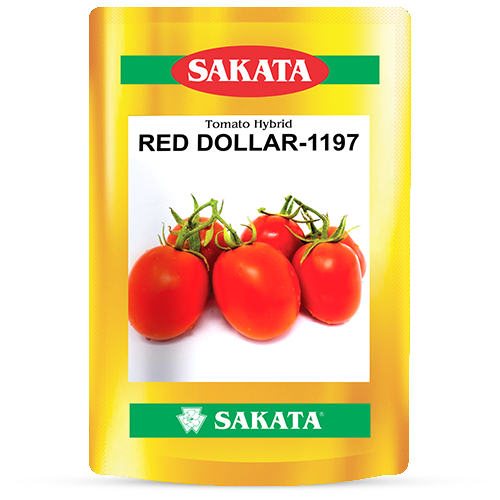
F1 RED DOLLAR (1197)
| Crop Name | Tomato |
|---|---|
| Hybrid Name | F1 Red Dollar 1197 |
| Segment | Roma |
| Plant Habit | Semi-determinate plant habit with good foliage |
| Maturity Period | 65–70 DAT |
| Characteristics | • Oval-shaped fruits with good firmness • Good fruit setting • Intermediate resistance to Bacterial Wilt • Good heat set |
| Average Fruit Weight | 90–110 g |
| Climate | Tomato is a warm-season crop; optimum temperature for growth is between 21–24°C. |
| Sowing Window | Summer, Rainy and Winter Seasons |
| Focused Market | AS, HR, KA, TR, WB |
| Disorder / Symptom | Description & Control |
|---|---|
| Blossom-End Rot (BER) | A dark, leathery, sunken area at the blossom end (opposite the stem) of the fruit. It usually starts as a small, water-soaked spot. * Maintain consistent soil moisture: Water regularly and deeply, especially during fruit development. Mulching can help conserve moisture. * Soil testing: If the soil is deficient, incorporate calcium-rich amendments like gypsum or lime before planting. * Avoid excessive nitrogen fertilization: This can promote vegetative growth at the expense of fruit development and calcium uptake Control: Application of CN @ 15-20 Kg/Ha or spraying of Anhydrous Ca EDTA @0.5-1 gm /ltr |
| Fruit Cracking / Splitting | Splits or cracks on the fruit surface, usually radial (extending from the stem end) or concentric (circular around the stem end). Maintain consistent soil moisture: Regular and even watering is crucial. Mulching: Helps regulate soil moisture and temperature. Avoid excessive nitrogen fertilization: Use a balanced fertilizer. * Harvest fruits at the mature green or breaker stage: Ripe fruits are more susceptible to cracking Irrigation management |
| Blotchy Ripening (Cloudy Spot / Gray Wall) | Uneven ripening with blotches of green, yellow, or red on the fruit surface. Internal discoloration and hard, grayish areas may also be present. Ensure adequate light exposure. Maintain balanced fertilization. Control: Use resistant varieties, control vectors (aphids), and practice good sanitation. Avoid root damage during cultivation |
| Yellow Shoulder (Green Shoulder) | The shoulder area (near the stem) of the ripening fruit remains yellow or greenish-yellow and hard, even when the rest of the fruit turns red. Choose less susceptible varieties. Provide some shade during the hottest part of the day. Ensure adequate potassium nutrition. |
| Cat’s Face | Mishappen fruits with enlarged scars and holes in the blossom end of the fruit caused by cool and abnormal temperature , disturbance to flowers , herbicide exposure Control: Avoid cool seasons and maintain adequate soil moisture. |
| Sun Scald | Whitish shiny blisters on the fruit which results in a sunken area that may become pale yellowish and wrinkled causes heavy pruning escepcially when the foliage cover is low or loss of foliage due to disease and coupled with high temperature Control: Carefull pruning and harvesting, good foliage disease control |