| Parameter | Description | ||||||||||||||||
|---|---|---|---|---|---|---|---|---|---|---|---|---|---|---|---|---|---|
| Scientific Name | Brassica oleraceae var. italica | ||||||||||||||||
| Hybrid | F1 Saki | ||||||||||||||||
| Soil | Well drained red loamy soils with a pH range of 6.5 to 7 | ||||||||||||||||
| Land Preparation | Ploughing of land 2-3 times, crush the clods with renovator and prepare fine bed. | ||||||||||||||||
| Spacing | 60*45 cm | ||||||||||||||||
| Climate | It s cool season crop but sensitive to low temperature and high temperature. Average temperature of 10-25°C was required. | ||||||||||||||||
| Season |
|
||||||||||||||||
| Seed Rate | 0.20 kg/ha or 30 thousand seedlings / ha | ||||||||||||||||
| Fertilizers & Manures |
|
||||||||||||||||
| Irrigation | Irrigation – 3-4 days interval to maintain soil moisture at field capacity. In summer once in 2-3 days interval. Rainy and Rabi – 4-5 days interval Method of irrigation – Furrow / Drip irrigation, Avoid sprinkler irrigation | ||||||||||||||||
| Weed Control | Manual weeding: 2-3 times during crop cycle | ||||||||||||||||
| Any Special Crop Practices | Removal of side shoots at 30-40 days after transplanting. Removal of lower leaves touching the ground to maintain stem/stalk length and avoiding foliar disease. | ||||||||||||||||
| Diseases |
|
||||||||||||||||
| Pests |
|
||||||||||||||||
| Harvesting | Harvesting starts from 65-70 days after transplanting. Average curd weight at the time of harvest is 350-400 g | ||||||||||||||||
| Yield | 10-12 t/ha | ||||||||||||||||
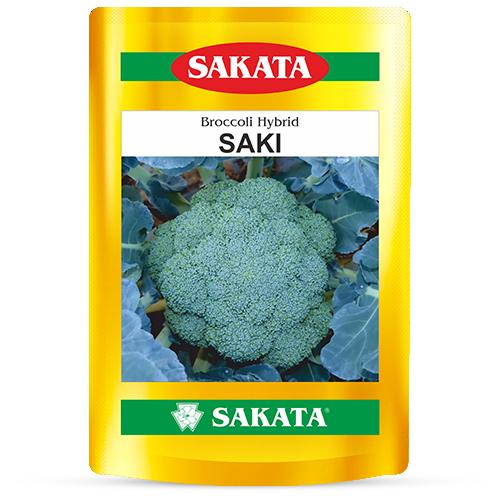
F1 Saki
| Crop Name | Broccoli |
|---|---|
| Hybrid Name | F1 Saki |
| Segment | Calabrese |
| Plant Habit | Erect |
| Maturity Period | 55–60 DAT |
| Characteristics |
• Perfect dome-shaped bluish-green curd with excellent compactness • Small to medium-sized beads • Highly uniform curd size |
| Average Curd Weight | 400–500 g |
| Climate | It is a cool-season crop. Ideal temperature requirement: 10–25°C |
| Sowing Window | June–August, September–November, February–April |
| Focused Market | All India |
| Parameter | Description |
|---|---|
| Zoning | Alternate dark and light colour rings are formed on the beet root. Zoning occurs due to high temperature or irregular supply of moisture. |
| Anthocyanin | Pigmentation in green broccoli curds disfigures appearance due to high temperature. Controlled by using tolerant hybrids. |
| Bracting | Unwanted leafy growth on curds due to high temperature and low moisture. Controlled by using tolerant hybrids. |
| Hollow Stem | Presence of cavities within the broccoli stem. Controlled by avoiding excess irrigation and nitrogen; apply boron @ 25 kg/ha. |
| Cat Eye | Some florets on the curd break into yellow or green flower buds, resulting in uneven bead size and colour. Caused by temperature and irrigation fluctuations. Controlled by avoiding excess irrigation. |
| Brown Beads | Brown, small, undeveloped flower buds on the broccoli head due to high temperature, excess moisture, and calcium deficiency. Controlled by avoiding excess irrigation and applying Calcium Nitrate @ 50 kg/ha. |