| Parameter | Description | ||||||||||||||||
|---|---|---|---|---|---|---|---|---|---|---|---|---|---|---|---|---|---|
| Scientific Name | Brassica oleracea var. capitata | ||||||||||||||||
| Hybrid | F1 Green Express | ||||||||||||||||
| Soil | For early crop, light soils are best, whereas for late crop, heavy soils are preferred. The optimum soil pH is 6 to 7. | ||||||||||||||||
| Land Preparation | Ploughing of land 2–3 times and make fine tilth. | ||||||||||||||||
| Spacing | 60 × 45 cm or 45 × 30 cm | ||||||||||||||||
| Climate | Cabbage thrives under a cool, moist climate, particularly during the winter months in the plains. The ideal temperature range for cabbage growth is between 15°C and 25°C. | ||||||||||||||||
| Season | Cabbage is grown in all seasons. | ||||||||||||||||
| Seed Rate | 0.2 kg/ha | ||||||||||||||||
| Fertilizers & Manures |
|
||||||||||||||||
| Irrigation | 3-4 days interval to maintain field capacity in winter and once in 7 days during rainy season. | ||||||||||||||||
| Weed Control | Manual weeding: 2-3 times. | ||||||||||||||||
| Any Special Crop Practices | |||||||||||||||||
| Diseases |
|
||||||||||||||||
| Pests |
|
||||||||||||||||
| Harvesting | Harvesting is done when the heads are well developed and firm, usually ready by 55–60 days after transplanting. | ||||||||||||||||
| Yield | 40–45 t/ha | ||||||||||||||||
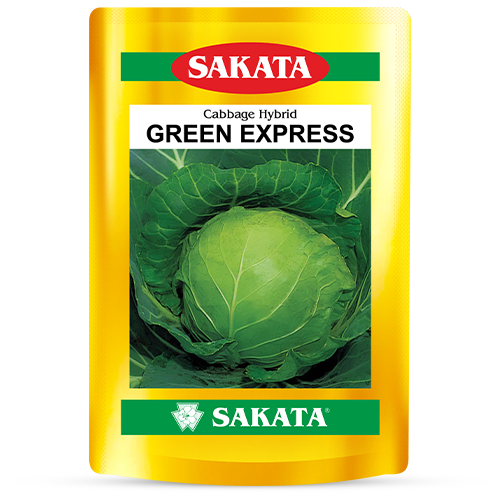
F1 Green Express
| Crop Name | Cabbage |
|---|---|
| Hybrid Name | F1 Green Express |
| Segment | Round |
| Plant Habit | Erect plant habit |
| Maturity Period | 55–60 DAT |
| Characteristics | • Strong plant vigor with good foliage • Compact, round, and green-colored heads • Suitable for early market |
| Average Head Weight | 1200–1500 g |
| Climate | The ideal temperature range for cabbage growth is between 15°C and 25°C. |
| Sowing Window | All season |
| Focused Market | CG, UP, UK, East India |
| Parameter | Description |
|---|---|
| Tip Burn | Brown or necrotic spots at the tips and margins of inner leaves within the head linked with calcium deficiency and excessive nitrogen and phosphorus. Control: Ensure adequate calcium supply through soil amendments or foliar applications, and manage nitrogen and potassium fertilization accordingly. |
| Splitting / Cracking | Cracks or splits appearing on the head due to rapid growth, high humidity, and excessive water pressure within the head can lead to splitting. Control: Avoid excess irrigation and fertilizers. |
| Blindness | Loss of inner leaves within the head, leaving only the outer leaves due to low and high temperature. Control: Regulate temperature in the nursery. In case of raised bed nurseries, provide adequate irrigation and shade. |
| Wiry Stem | Elongated hypocotyls in seedlings and in mature seedlings hard stems and lesser leaves caused by excess temperature. Control: Regulate temperature in the nursery. In case of raised bed nurseries, provide adequate irrigation and shade. |