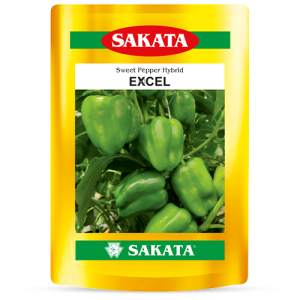
| Scientific Name |
Capsicum annuum |
| Hybrid |
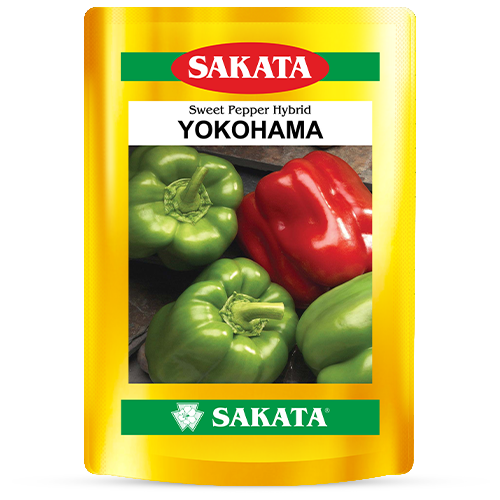
F1 Yokohama |
| Soil |
Hot Pepper are found to grow in a variety of soils provided they are deep, well drained, well aerated and fertile soils like light loamy or sandy loam and black soils rich in lime and inorganic matter and having a pH range of 6.5-7.5. |
| Land Preparation |
The main field should be ploughed 3-4 times to get a fine tilth. FYM @ 25-30 t/ha is incorporated during the last ploughing. For irrigated crop during summer season, ridges and furrows are made at the recommended spacing. In summer, planting should be done on furrows, while in rainy season also it is better to plant on ridges. Shade should be given during summer season for 1 week period. |
| Spacing |
Light soil: 60*45 cm
Medium Soil: 75*60 cm
Heavy Soil: 90*60 cm |
| Climate |
Hot Pepper are grown in both tropical and sub-tropical area ranging from sea level to 2000 m altitudes in Indian conditions. A temperature range of 20-30°C would be most ideal. |
| Season |
All seasons |
| Seed Rate |
Light Soil: 0.15 Kg/Ha
Medium Soil: 0.12 Kg/Ha
Heavy Soil: 0.12 Kg/Ha |
| Fertilizers & Manures |
| Type |
Quantity / Notes |
| FYM |
25-30 t/ha |
| Nitrogen (N) |
200 Kg/Ha |
| Phosphorus (P₂O₅) |
250 Kg/Ha |
| Potassium (K₂O) |
250 Kg/Ha |
| Any special cases: No |
|
| Irrigation |
During first month of transplanting, a light irrigation is required. In summer, irrigation on alternate days is essential in light soils. |
| Weed Control |
Manual weeding required 2-3 times. |
| Any Special Crop Practices |
Staking is required in areas where soil fertility is high and windy areas. |
| Diseases |
| Name of the Disease |
Symptoms & Management |
| Anthracnose |
The disease is also called ripe fruit-rot and is characterized by circular and sunken spots with black margins. The spotted fruits drop off prematurely resulting in heavy loss of yield. The fungus is seed-borne and spread with windblown rains.
Control: Chlorothalonil 75% WP (1.5 g/L), Azoxystrobin 23% SC (1 ml/L), Zineb 75% WP (2 g/L), Kresoxim methyl 44.3 SC @ 1 g/L, Azoxystrobin 4.7% + Mancozeb 59.7% + Tebuconazole 5.6% WG @ 3 g/L |
| Powdery Mildew |
Symptoms are characterized by development of a powdery mass on the leaves and rapid defoliation of the plants.
Control: Hexaconazole 5% EC @1ml/ltr, Tebuconazole 50% + Trifloxystrobin 25% @ 0.5 gm/ltr, Polyoxin D Zinc Salt 5% SC @ 2 ml/ltr, Tribasic Copper Sulphate 35.5 SC @ 3 ml/ltr |
| Frog Eye Leaf Spot |
The common symptoms are choloretic lesions, angular to irregular in shape and later turning grayish brown with sporulation at the center of the spot on the leaves.
Control: Chlorthalonil 75% WP @ 2 gm/ltr |
| Fusarium Wilt |
The disease is characterized by wilting of the plant and upward and inward roling of leaves. The leaves turn yellow and die.
Control: Captan 70% + Hexaconazole 5% WP @ 2 gm/ltr |
| Bacterial Leaf Spot |
It causes serious damage to chilli leaves and fruit. Symptoms are characterized by yellowish green spots on younger leaves and dark and water-soaked lesions developed on older leaves. Small blisters like spots occur on the fruit later becoming warty in appearance.
Control: Thiophenate Methyl 33% + Kasugomycin 2.21% SC @ 2.5 ml/ltr, Kasugomycin 5% + COC 45% WP @ 2 gm/ltr |
| Die Back |
Tip drying (Apical meristem) and drying of leaves.
Control: Azoxystrobin 4.7% + Mancozeb 59.7% + Tebuconazole 5.6% WG @ 3 gm/ltr |
| Chilli Leaf Curl (ChLCV) |
Leaf curl of hotpepper is caused by Tobacco virus 16 or Nicotiana virus 10 which also cause leaf curl of tomato, tobacco and papaya. Curling of leaves, their small size, shortened internodes and general dwarfing. The spread of the disease can be reduced to some extent by controlling the insect-vector (Bemesia tabaci).
Control: Acephate 75% SP @ 1.5 gm/ltr, Acetamiprid 20% SP @ 1.5 gm/ltr, Thiamethoxam 25% WG @ 1.5 gm/ltr, Difenthiuron 48% + Dinetofuran 8% WG @ 1.25 gm/ltr; Yellow sticky traps 30–35/ha |
| CMV & CVMV |
The symptoms of chilli mosaic are appearance of yellow and dark green areas on the leaf surface, shrunken or raised (puckering). Sometimes the leaves are greatly reduced in size and become filamentous. Diseased plants produce less flowers and fruits. The fruits are usually deformed and rough.
Control: Acephate 75% SP @ 1.5 gm/ltr, Acetamiprid 20% SP @ 1.5 gm/ltr, Thiamethoxam 25% WG @ 1.5 gm/ltr, Difenthiuron 48% + Dinetofuran 8% WG @ 1.25 gm/ltr; Yellow sticky traps 30–35/ha |
| Collar Rot |
Fungus affects the collar region of the plant leading to discoloration of the stem disrupting xylem and phloem resulting in wilting of the plants
Control: Penflufen 13.28% + Trifloxystrobin 13.28% FS @ 0.5 ml/ltr, Pyraclostrobin 3.5% + Thiram 15% + Clothianidin 22.5% FS @ 0.5 ml/ltr |
|
| Pests |
| Name of the Pest |
Symptoms & Management |
| Thrips |
Suck the sap in lower surface of leaf, results leaf looks like silvery appearance, leaf distortion, reduce flowering, stunted growth with no fruits in severe case
Control: Azadirachtin 10000 PPM @ 2 ml/ltr, Fipronil 7% + Hexythiazox 2% SC @ 2 ml/ltr, Fluxametamide 10% EC @ 0.8 ml/ltr, Fluxametamide 5.81% + Bifenthrin 5.81% EC @ 1.25 ml/ltr, Thiacloprid 250 SC @ 2 ml/ltr |
| White Fly & Aphids |
The insects suck the plant parts especially leaves leading to crinkling and curling of the leaves.
Control: Acephate 75% SP @ 1.5 gm/ltr, Acetamiprid 20% SP @ 1.5 gm/ltr, Thiamethoxam 25% WG @ 1.5 gm/ltr, Difenthiuron 48% + Dinetofuran 8% WG @ 1.25 gm/ltr; Yellow sticky traps 30–35/ha |
| Mites |
They suck the sap from lower surface of the leaves leading to downward curling of leaf, reduced leaf lamina and ultimately leading to stunted growth.
Control: Etoxazole 10% SC @ 0.75 ml/ltr, Fenzaquin 10% EC @ 2 ml/ltr, Propargite 57% EC @ 1 ml/ltr, Spiromesifen 240 SC @ 1 ml/ltr |
| Fruit Borer & Leaf Cutter |
The adult larvae bores inside the fruit & stem leaving a empty hole.
Control: Cyclaniliprole 10% DC @ 0.8 ml/ltr, Chlorantraniliprole 4.5% + Novaluron 11.5% + Emamectin Benzoate 1.5% SE @ 1 ml/ltr |
|
| Harvesting |
Green Fruits 60-65 DAT |
| Yield |
22–25 MT/ha |