| Parameter | Description | |||||||||||||
|---|---|---|---|---|---|---|---|---|---|---|---|---|---|---|
| Scientific Name | Beta vulgaris | |||||||||||||
| Hybrid | F1 Fortune | |||||||||||||
| Soil | Deep red loamy soils with good drainage also suited in laterite soils with soil pH of 6.5 to 7.5. | |||||||||||||
| Land Preparation | Ploughing the soils 2-3 times, make fine tilth with rotavator and apply recommended FYM at time of ploughing. | |||||||||||||
| Spacing | Manual broadcasting or seed dibbling, maintain spacing of 30×10 cm. | |||||||||||||
| Climate | Cool to moderately warm season with a temperature range of 18–23°C required to obtain good quality roots. | |||||||||||||
| Season |
|
|||||||||||||
| Seed Rate | Broadcasting requires 8–10 kg/ha Seed dibbling requires 6–7 kg/ha (depends on spacing and method) |
|||||||||||||
| Fertilizers & Manures |
|
|||||||||||||
| Irrigation | Enough soil moisture required for uniform germination. Irrigate every 4–5 days in summer and every 10–12 days during rainy season. | |||||||||||||
| Weed Control | Manual weeding | |||||||||||||
| Special Crop Practices | Hand thinning to remove excess plants necessary for uniform root development. | |||||||||||||
| Diseases |
|
|||||||||||||
| Pests |
|
|||||||||||||
| Harvesting | The crop will be ready for harvest after 60-65 days after sowing, harvesting can be done manually by pulling out each bulb from the soil or by mechanical harvester. The root bulbs have to be washed with water to get rid of soil debris and other infections. Grading can be done based on market requirement. | |||||||||||||
| Yield | 25–30 tons/ha |
F1 Fortune
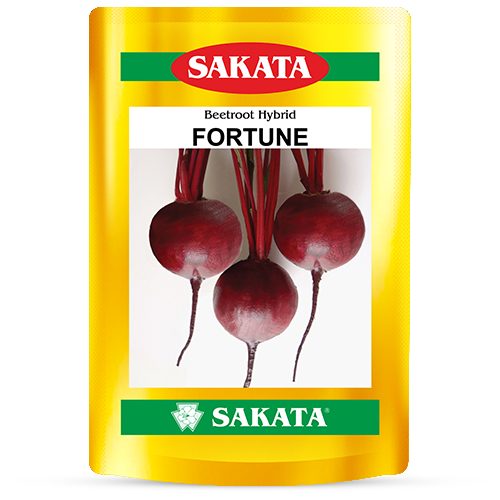
| Crop Name | Beetroot |
|---|---|
| Hybrid Name | F1 Fortune |
| Segment | Round |
| Plant Habit | Erect |
| Maturity Period | 60–65 days |
| Characteristics | • Uniform round shaped roots with smooth exterior and uniform size. • Deep red interior and exterior root color with very light zoning. • High yielding variety. • Excellent heat tolerance. • Suitable for fresh and processing market. |
| Average Root Weight | 200–250 gms |
| Climate & Season | Cool to moderately warm season |
| Sowing Window | Winter sowing: Oct–Nov, Rainy Sowing: June–Aug, Summer Sowing: March–April |
| Focused Market | MP, WB, KA, MH, TN, BHR |
| Parameter | Description |
|---|---|
| Zoning | Alternate dark and light colour rings are formed on the beet root. Zoning occurs due to high temperature or irregular supply of moisture. |